image of a compass
NDI

The National Democratic Institute is a nonprofit, nonpartisan organization working to support and strengthen democratic institutions worldwide through citizen participation, openness and accountability in government.

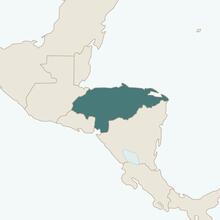
Though Honduras had made significant strides toward strengthening its democracy since transitioning from military rule in 1980, recent events disrupted the country’s democratic institutions and interrupted the constitutional order. Although civil society had played a more active role in strengthening the oversight of the electoral process, accusations of irregularities surrounded previous Honduran elections. The 2005 presidential election highlighted the shortcomings of the Honduran electoral system, particularly in the transmission of election results.  Electoral reforms passed in 2007 aimed to address some of these issues. These reforms also brought new challenges such as decentralizing the vote count to the municipal and departmental levels, which delayed the release of final results in the November 2008 primary elections.

Throughout early 2009, Honduras witnessed an extended dispute between branches of government over attempts by President Manuel Zelaya to hold a poll on convening a constituent assembly to amend the Honduran constitution, a step ruled illegal by the Supreme Court. The failure to reconcile these positions resulted in Zelaya’s forcible removal on June 28, 2009, and Honduran society became further polarized between those who opposed Zelaya’s exile as illegal and those who argued that the move marked the legitimate removal and replacement of a president who violated constitutional provisions. The Honduran Congress replaced Zelaya with its speaker Roberto Micheletti, who in turn appointed a new government. Despite suspension of Honduras from the Organization of American States (OAS) and overwhelming international condemnation of what was broadly seen as a coup d’état, Zelaya was not restored to office.

Against this backdrop, the Supreme Electoral Tribunal (Tribunal Supremo Electoral, TSE) continued to prepare for the constitutionally-mandated November 29 elections, convoked prior to June 28, and the previously chosen candidates continued campaigning. The campaign period was marked by intermittent restrictions on constitutional liberties, while demonstrations organized by supporters of the deposed president were met with a strong police response and human rights organizations documented a pattern of rights violations following the coup. The de facto government also imposed, and later lifted, a state of siege after Zelaya appeared in the Brazilian Embassy in Tegucigalpa in September, where he remained until January 27. Negotiations between representatives of the two sides resulted in the Tegucigalpa/San José Accord, signed on October 30, but implementation of the accord quickly stalled over disagreement on how to constitute a unity government.

The November 29 elections took place as scheduled and yielded a decisive victory for Porfirio “Pepe” Lobo of the opposition National Party (Partido Nacional de Honduras, PNH) and the PNH’s congressional and municipal candidates. However, the elections did not receive the recognition of all domestic or international actors. On December 2, Congress overwhelmingly rejected Zelaya’s restoration in a vote provided for in the Tegucigalpa/San José Accord.

On January 27, 2010, Lobo was sworn in as president and signed into law a political amnesty that absolved the military officers and others involved in the coup of any wrongdoing. Immediately following his inauguration, Lobo escorted Zelaya to the airport, where he was flown to exile in the Dominican Republic. Despite the transfer of power and Lobo’s promises to fulfill the provisions set forth in the Tegucigalpa/San José Accord, the new government was not immediately recognized by most of the countries in the Western Hemisphere. In April, Lobo formally created the Truth Commission stipulated in the Accord, including both international and Honduran representatives, to investigate the events surrounding the June 2009 coup. Anti-coup forces that had supported Zelaya have shifted their focus to promoting a constituent assembly, and Honduran society remains highly polarized.

Nonpartisan Domestic Election Monitoring

NDI worked with nonpartisan Honduran election monitoring groups for the 2008 primary elections and 2009 general elections, sharing international best practices and providing methodologies to promote their technical, logistical and strategic capacity to monitor pre-election and election-day conditions. With NDI assistance, a nonpartisan consortium of Honduran civic groups, Making Democracy (Hagamos Democracia, HD), recruited and trained a national network of volunteer nonpartisan domestic monitors. On election day, HD deployed its volunteer monitors to a random sample of over 1,000 polling stations in 283 of the country’s 298 municipalities to conduct a parallel vote tabulation (PVT or “quick count”), providing valid and reliable information about the quality of the election-day process at a national level, as well as the results of the presidential election. HD’s information suggested that the electoral process was characterized by technical improvements from previous years. HD accurately projected Lobo’s victory by 8:30 p.m. on election night, as well as a 47.6 percent turnout based on the Honduran voter registry, close to the final official figure of 49.9 percent.

International Election Assessment Mission

NDI also deployed an international assessment mission consisting of 21 experts from the United States, Latin America and Europe. Due to time constraints, NDI determined that a traditional international election observation mission, based on international standards, would not be feasible. NDI’s less formal assessment mission did not take a position on the larger political issues surrounding the election, but sought to provide an impartial, objective source of information on the conduct of the elections. Delegation members met with election officials and representatives of political parties as well as human rights and other civil society organizations.

The delegation’s preliminary and final reports noted that while Honduran election authorities took some meaningful steps to increase transparency, structural problems remain that require reforms. One recommendation included updating the voter registry, which includes many Hondurans who have emigrated or are deceased. The mission also recommended the prompt establishment of the Truth Commission provided for in the Tegucigalpa/San José Accord and noted the opportunity and responsibility of the new government to work to overcome the country’s divisions. The full report is available on NDI’s website.

Contact Information

For more information about these programs, use our contact form or contact:

Guatemala City
Eduardo Núñez, Resident Director
+502 2385 3344

Washington, D.C.
Sara Barker, Program Officer
(202) 728-5618

Alex Kerchner, Senior Program Assistant
(202) 728-6310

  Subscribe to updates about Honduras