Success Story
Iraqi Women Turn Local Strategies into National Policy
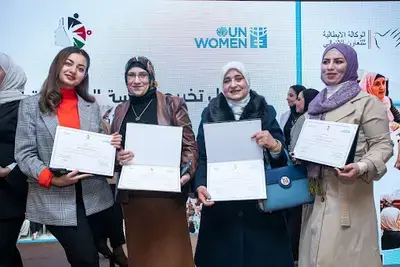
Across southern and central Iraq, around 90 women are working together to ensure that government decisions reflect the everyday realities of Iraqi women and girls. Through a program supported by Global Affairs Canada and implemented by the National Democratic Institute (NDI), provincial Women’s Advisory Boards (WABs) are strengthening women’s voices in governance and bridging gaps between communities, local governments and public service providers.
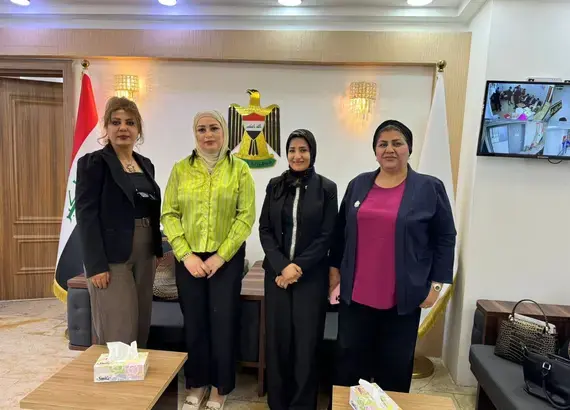
In Baghdad, that effort is led by Niran Al-Zehhawi, a lawyer and the current President of the Baghdad Women’s Advisory Board. Drawing on her experience as a lawyer and her commitment to expanding women’s political space, she and her team are working to address some of the province’s most pressing concerns: water conservation, integrated education, and fight against child labor across the province of Baghdad.
“When the opportunity for the Women's Advisory Boards project came, I saw it was distinctive,” Niran explains. “We are the link between the government and society; not a critic, but a supporter.” Knowing the project was implemented by NDI, now in its second phase, gave her confidence in the program’s professionalism and its track record with the Iraqi community.
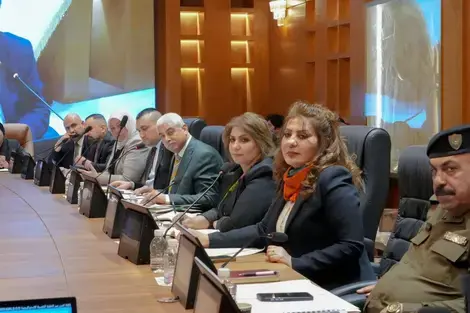
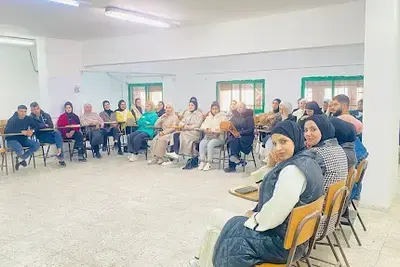
The Baghdad WAB holds a roundtable with government stakeholders.
Turning Community Priorities into Policy Solutions
The Baghdad WAB has enabled women to become trusted intermediaries between provincial officials and the community. With regular mentoring and guidance from NDI, the WAB established a network of allies in government and surveyed their community to identify priorities. Each member also brings their own professional and personal experiences to the group, helping to inform the group’s priorities alongside insight they’ve collected through community outreach. Using their lived experience, the WAB members are able to build trust and respect with their community and translate the challenges they face into concrete policy priorities. Rather than tackling broad challenges in the abstract, the group narrowed its focus to actionable issues such as water scarcity, combating child labor and improving access to education for children with disabilities.
After regular meetings with government representatives and coaching sessions with NDI, the Baghdad WAB developed policy papers with actionable recommendations to address these everyday and systemic challenges in their community.
In addition to serving as a new avenue for community members and their governments to interact, the WABs are introducing new methods of resolving community challenges. Civil society efforts to recommend and affect policy are relatively new for these central and southern provincial governments, and the WABs have become a resource for local governments, which has opened doors that are usually closed to activists.
“Decision-makers are often approached by activists and do not always take them seriously,” Niran says. “However, once we present our policy paper work, we notice a change. We approach them by saying ‘How can we work together? We are here to help analyze the problem and find solutions.’ That lowers defenses and opens dialogue.”
That dialogue is producing results. Government officials have demonstrated their willingness to support the WAB through their own connections. The Governor of Baghdad has offered feedback on the WAB’s proposed initiatives, highlighted areas for collaboration, and coordinated with the Women’s Affairs Directorate to share resources that may be helpful for the WAB.
As President, Niran is replicating the structure and cohesion that she wants to see within the government. At the start of the program, the WAB members participated in team building and leadership exercises, and since then, they have fostered a democratic atmosphere among a team of 25 women of different backgrounds, religions, ages and experiences. The group operates under agreed-upon bylaws, leadership is intentionally horizontal, and cooperation is encouraged. “As a president, I focus on giving them space to contribute and be creative,” she said. “I encourage cooperation where we teach one another. For example, a woman with a strong background in politics helps me learn international law, while a media expert trains the PR and media committee in the team. This way, we develop these skills together."
Looking Ahead: Sustaining Women’s Leadership
The WABs change presidents every six months, and as Niran looks beyond her tenure, she is focused on sustainability efforts such as setting up a legal framework to institutionalize the WAB and encouraging the members, especially the younger members, to take up leadership roles in the WAB and in their professions.
Across Iraq, the Women’s Advisory Boards are challenging long-standing barriers to women’s political participation through structured engagement, evidence-based policy advocacy and sustained dialogue. By organizing, building trust, and presenting practical solutions, these women are helping normalize women’s presence in decision-making spaces and advancing a more representative and responsive model of local governance. In doing so, they are not only advocating for improved services in their daily lives; they are strengthening the foundations for accountable leadership and meaningful citizen participation in Iraq’s democratic future.

More Success Stories
View All 
Yemen
Middle East and North Africa