Toolkit/Guide
Resources
Community Driven Reconciliation: A Gender-Sensitive Toolkit for Peace Activists
Whether you are first-time activist, an individual with a project idea, or part of an established organization, this toolkit, Community Driven Reconciliation: A Gender-Sensitive Toolkit for Peace Activists, is designed to provide peace activists with practical steps to transform and mitigate conflict and support them as they assume a more central peacebuilding role in their community.

IRI & NDI Deploy Second Joint International Delegation to Assess Pre-Election Environment in Nigeria
Abuja, Nigeria – The International Republican Institute (IRI) and the National Democratic Institute (NDI) are currently fielding the second joint delegation to Nigeria to assess preparations for the upcoming national elections in early 2019. The assessment takes place from September 19-28, 2018.
The delegation consists of the following members:
● Robert Benjamin, Senior Associate & Regional Director for Central and Eastern Europe, NDI (USA);
Opportunities and Challenges facing Ukraine’s Democratic Transition
NDI Ukraine’s July 2018 public opinion survey showed overwhelming and stable support for a fully functioning democracy (83 percent). The demand remains strong across all regions of Ukraine with equal justice for all and free and fair elections being the most important characteristics of democracy for Ukrainian citizens.
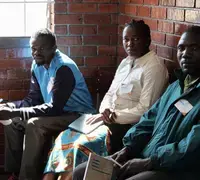
Joint IRI/NDI Statement on Post-Election Observations in Zimbabwe
Harare, Zimbabwe—The joint International Republican Institute (IRI) and National Democratic Institute (NDI) Zimbabwe International Election Observation Mission (ZIEOM) hosted a six-person post-election delegation to Harare on September 4-8, 2018. As part of its comprehensive effort to observe the July 30, 2018, harmonized elections, the ZIEOM’s post-election delegation was co-led by Ambassador Johnnie Carson and Constance Newman both former U.S.

Summary: Study on Radicalization Explores Roots of Extremism in Niger
Niger’s National Center for Strategic and Security Studies (Centre National d’Etudes Stratégiques et de Sécurité - CNESS) conducted a study on radicalization factors influencing young people in rural, urban, university, and penal environments.