Election Statement
Resources
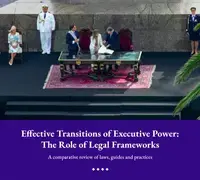
Effective Transitions of Executive Power: The Role of Legal Frameworks
A smooth transfer of executive power from one administration to another is a quintessential element of democratic governance. Yet effective transitions are not guaranteed simply because election winners and losers respect the will of voters. Rather, clear principles, rules and procedures are needed to guide transition processes. Such rules support clarity, predictability and accountability across transition processes over time, and help depoliticize potentially contentious handovers.
Digital Democracy or Data Exploitation: Monitoring the Use of Personal Data in Elections
As campaigns become increasingly data-driven and AI-powered, democratic institutions face growing threats from the exploitation of personal data in electoral processes. Through massive data collection and processing, individuals are profiled based on their political views and characteristics, then precisely targeted with content designed to influence their opinions and behavior.
Synthetic Voices, Real Voters: A Guide to Monitoring Generative AI in Elections for Nonpartisan Citizen Observers
Democratic elections rely on a competitive process, faith in electoral institutions, and informed participation by all citizens. However, the ability of voters to make choices based on complete and accurate information is increasingly strained by a fractured and frenetic information environment. This is exacerbated by the emergence of widely available generative Artificial Intelligence (“genAI") tools.
Tech-Facilitated Parliamentary Monitoring: 8 Use Cases
Effective and capable parliaments are the bedrock of a healthy democracy. Parliaments are charged with enacting laws to advance the common good and with holding the executive branch accountable for their implementation.
Democratic Leadership in Crisis Contexts: A Communication Guide
Crises, whether triggered by natural hazards or by social events, are becoming an increasingly common feature of political life. These crises test the ability of democratic leaders to communicate. Ineffective communication not only fails to foster critical trust but also provides opportunities to aspiring autocrats whose movements use crises as fuel.